Powering Australia's expanding data centre network with small nuclear reactors could cost between $6 billion and $11 billion more annually than using solar power, according to a study by the Australian Conservation Foundation.reported The report, titled Phantom Energy, warns that the technology faces decades of deployment delays and prohibitive expenses, challenging recent political calls to lift the ban on nuclear power in the country.A study shows that using small nuclear reactors to power data centres in Australia would be much more expensive and slower to deploy than using solar energy.The Australian Conservation Foundation's analysis indicates that small modular reactor economics and deployment timelines render them unviable for Australia's data centre load compared to renewables.
The figures
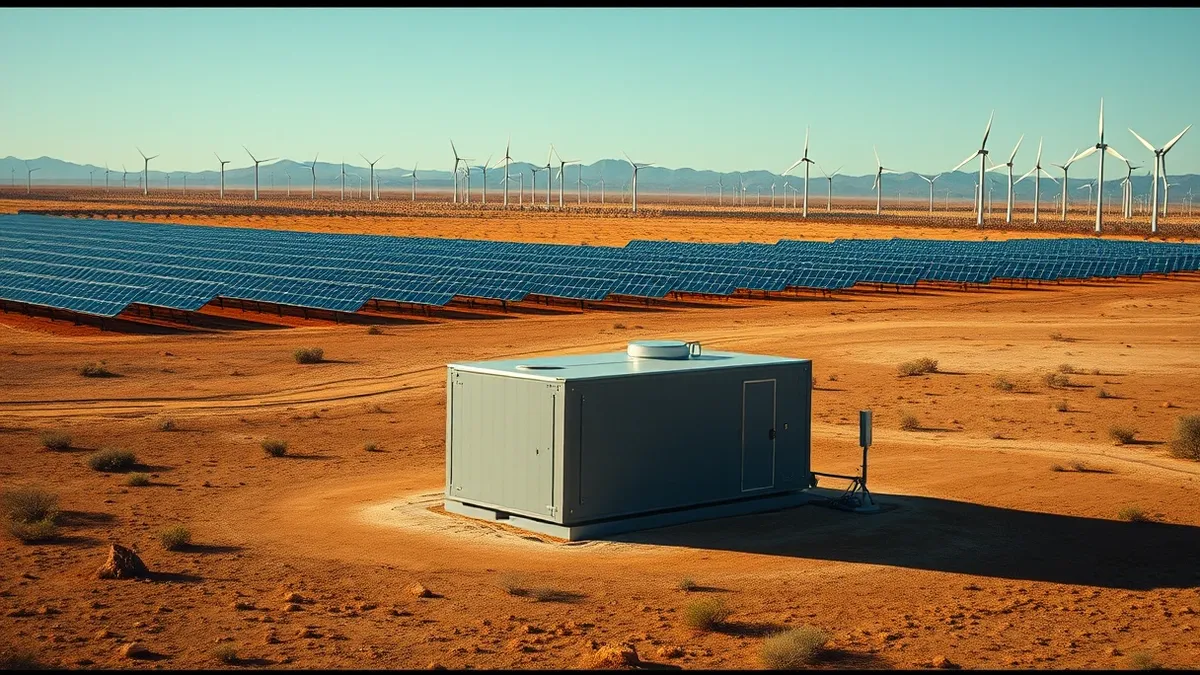
The Australian Conservation Foundation report calculated annual costs for powering data centres using small modular reactors at between $8.5 billion and $12.2 billion. By comparison, large-scale solar projects would cost between $780 million and $2 billion per year. Onshore wind developments were estimated to cost between $1.9 billion and $3.1 billion annually. These figures are based on electricity demand forecasts from the CSIRO and the Australian Energy Market Operator.
Behind the figures
The study analysed data from the CSIRO, the Australian Energy Market Operator, and the Nuclear Energy Agency to assess electricity demand and reactor viability. It reviewed global progress on small modular reactor technology, noting that only two such plants have been built, in Russia and China. Both projects suffered long delays and cost overruns, and neither used the modular construction methods intended to reduce expenses.
What it means for your stack
Inference engineers planning deployments in Australia must account for significant energy cost differentials between nuclear and renewable sources. The report indicates that small modular reactors remain unavailable for commercial use, meaning they cannot currently support infrastructure needs. With 160 operating data centres and 225 proposed, developers face a landscape where nuclear power is not a ready option for meeting rising electricity demand from data-intensive technologies.
Building on this
Developers cannot build on small modular reactor capabilities in Australia because the technology is not commercially available. The documented limits include a lack of mass-produced units and historical failures in cost and schedule for existing projects. Interfaces for power supply must therefore rely on established renewable sources like solar and wind, which offer significantly lower annual costs. The uncertainty around nuclear deployment means infrastructure planning should exclude it as a near-term power source.
Why it matters
- The absence of commercially viable small modular reactors means developers cannot rely on this technology for immediate infrastructure scaling.
- With 225 proposed data centres, the gap between energy demand and nuclear supply timelines creates a critical planning constraint for engineers.
- Political efforts to remove nuclear bans do not align with the technical reality that no mass-produced reactors currently exist.
Topics: data centres, energy, nuclear, infrastructure, Australia
Updated
Then / now / next
Australia maintained a ban on nuclear power while data centre development remained at a lower scale.
A new report highlights the massive cost and availability gaps between nuclear and renewable energy for data centres.
The federal government is considering rules for data centre developments as political leaders continue to advocate for lifting the nuclear ban.
Story timeline
- Then Australia maintained a ban on nuclear power while data centre development remained at a lower scale.
- Now A new report highlights the massive cost and availability gaps between nuclear and renewable energy for data centres.
- Next The federal government is considering rules for data centre developments as political leaders continue to advocate for lifting the nuclear ban.
The strongest doubt
Counterpoint from the sources
Nationals leader Matt Canavan has reiterated calls to remove Australia's ban on nuclear power, arguing for its potential role despite the report's findings on cost and availability.
Numbers in context
Circle area is proportional to the magnitude; labels retain signs. Figures may describe different measures. Read their contexts above.Ask the article
Local keyword search of this article; no generated answers.Did this article give you the evidence you needed?
Your choice stays on this device. No public tally.Terms in this story
Small modular reactors
Nuclear power plants designed to be smaller and built in factories for mass production, though none have been commercially realized using this method.
Data centre
Facilities that house computer systems and associated components, requiring significant electricity for operation and cooling.
CSIRO
The Commonwealth Scientific and Industrial Research Organisation, which provided electricity demand forecasts used in the study.
Questions readers ask
How much would nuclear power cost for Australian data centres?
The Australian Conservation Foundation estimates annual costs between $8.5 billion and $12.2 billion for small modular reactors.
Are any small modular reactors currently operating commercially?
No commercial reactors have been built using modular manufacturing methods; only two exist in Russia and China, both with delays and cost overruns.
What is a cheaper alternative for data centre power?
Large-scale solar projects are estimated to cost between $780 million and $2 billion annually, significantly less than nuclear or wind options.
Connected stories
Reading receipt
- Small modular reactors would cost up to $12.2 billion annually for Australian data centres, compared to $2 billion for solar.
- No commercial small modular reactors have been built using mass-production methods designed to lower costs.
- Australia has over 160 operating data centres and 225 more planned or proposed developments.
Still open: Will the federal government's new rules for data centre developments account for the lack of available nuclear power infrastructure?
Still open: How will the timeline for small modular reactor deployment in Australia shift if mass-production methods are eventually perfected?