Microsoft has reportedly met with the White House Office of Science and Technology Policy and the National Security Council. These discussions occurred as the Federal Communications Commission considered an import ban on Chinese optical transceivers.Microsoft is trying to stop a government ban on Chinese parts that are essential for connecting AI computers.Microsoft engaged with OSTP and NSC to oppose an FCC import restriction on Chinese optical interconnects, citing supply risks. According to Reuters, the company joined the Information Technology Industry Council in lobbying against the proposed restriction.reported
Evidence: reported
Microsoft lobbies against potential ban on Chinese optical networking gear for AI data centers as FCC mulls restricting importsaifleet-tomshardware
The figures
Tom's Hardware reports that Microsoft is building 35 data centers in the US.reported The company plans for 134 additional facilities. Chinese companies currently supply 66% of the global market for optical transceivers.reported Only two US-based firms, Coherent and Lumentum, produce these modules for data centers.
Evidence: reported
Microsoft lobbies against potential ban on Chinese optical networking gear for AI data centers as FCC mulls restricting importsaifleet-tomshardware
Evidence: reported
Microsoft lobbies against potential ban on Chinese optical networking gear for AI data centers as FCC mulls restricting importsaifleet-tomshardware
Behind the figures
The market share figure reflects the global distribution of optical transceiver production. The count of US manufacturers was determined by identifying domestic producers capable of supplying the specific modules required by modern data centers. The data center counts represent Microsoft's current construction and planned expansion.
What it means for your stack
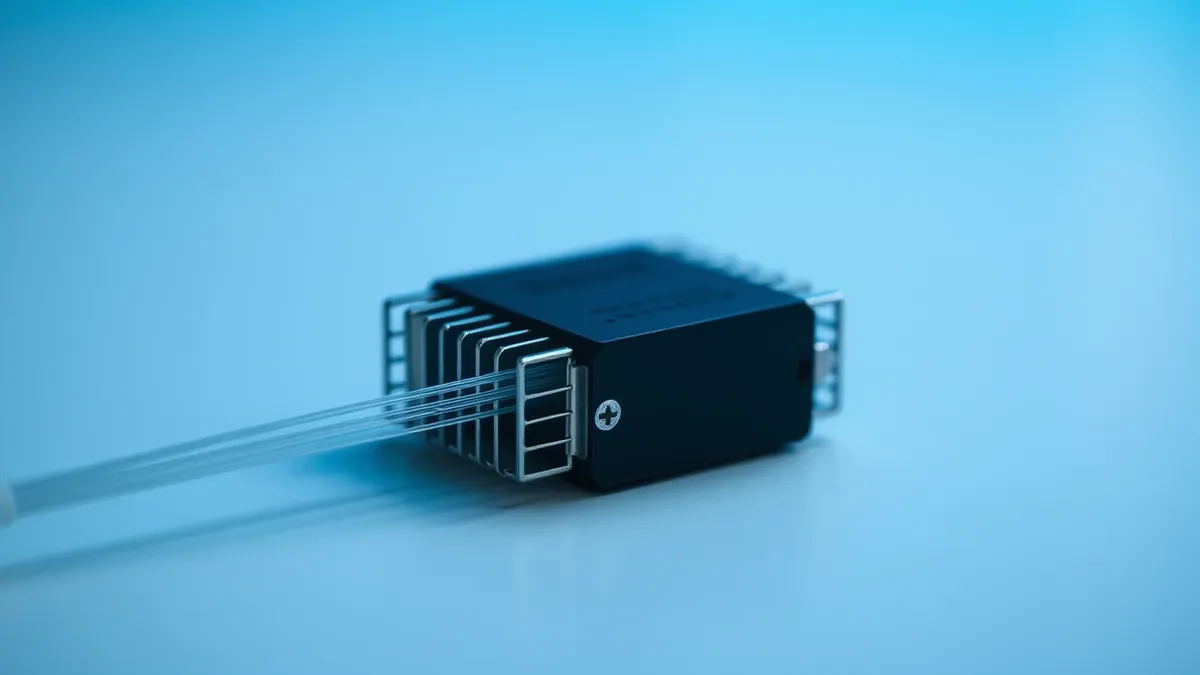
Optical transceivers convert electrical signals to light for fiber optic transmission. Data centers use them to connect AI GPUs and server racks. These modules offer faster speeds, lower latency, and less power consumption than copper connections. A ban would remove the majority of available supply.
Building on this
Developers relying on high-throughput AI infrastructure face potential deployment delays. The ITI stated that AI chips could sit unutilized without these transceivers. With only two domestic suppliers, scaling up to replace Chinese imports may not be possible immediately. This limits the ability to expand GPU clusters rapidly.
Why it matters
- Supply chain constraints could delay the deployment of new AI models requiring massive compute resources.
- Engineers may need to design systems that account for potential hardware shortages or longer lead times.
- The reliance on a small number of US vendors increases the risk of bottlenecks in network infrastructure.
- Policy decisions on hardware imports directly impact the speed and scale of AI data center construction.
Topics: AI infrastructure, supply chain, Microsoft, FCC, optical networking
Updated
Then / now / next
Chinese firms supplied the majority of optical transceivers for global data center networks.
The FCC is considering an import ban, prompting Microsoft and the ITI to lobby against it.
Regulators will decide whether to restrict imports, potentially impacting AI infrastructure rollout timelines.
Story timeline
- Then Chinese firms supplied the majority of optical transceivers for global data center networks.
- 10 Nov 2026 Microsoft lobbies against potential ban on Chinese optical networking gear for AI data centers as FCC mulls restricting imports
- Now The FCC is considering an import ban, prompting Microsoft and the ITI to lobby against it.
- Next Regulators will decide whether to restrict imports, potentially impacting AI infrastructure rollout timelines.
The strongest doubt
Counterpoint from the sources
The FCC cites national security risks, fearing compromised hardware could allow data theft or remote disruption of American data centers.
For readers
Developers
- Potential hardware shortages could delay the deployment of large-scale AI applications.
- Network architecture may need to account for limited availability of optical interconnects.
Policy
- Regulators are balancing security concerns against supply chain stability for AI infrastructure.
- Lobbying efforts highlight the tension between national security and technological advancement.
Investors
- Supply constraints could impact the growth trajectory of AI-dependent companies.
- Domestic manufacturers may see increased demand if imports are restricted.
Ask the article
Local keyword search of this article; no generated answers.Did this article give you the evidence you needed?
Your choice stays on this device. No public tally.Questions readers ask
Why is the FCC considering a ban on Chinese optical transceivers?
There are concerns that some transceivers could be compromised by Beijing to steal data, install malware, or disrupt operations.
How many US companies make these optical transceivers?
Only two US-based companies, Coherent and Lumentum, produce the optical transceivers needed for data centers.
What percentage of the global market do Chinese companies control?
Chinese companies currently supply 66% of the global market for optical transceivers.
Connected stories
Reading receipt
- Microsoft met with White House officials regarding a potential FCC import ban on Chinese optical transceivers.
- The ITI warns that restricting these components could halt data center rollouts and leave AI chips unutilized.
- Chinese firms supply 66% of the global market, while only two US companies produce the modules.
Still open: Will the FCC proceed with the ban despite industry lobbying?
Still open: Can US manufacturers scale production quickly enough to replace Chinese imports?