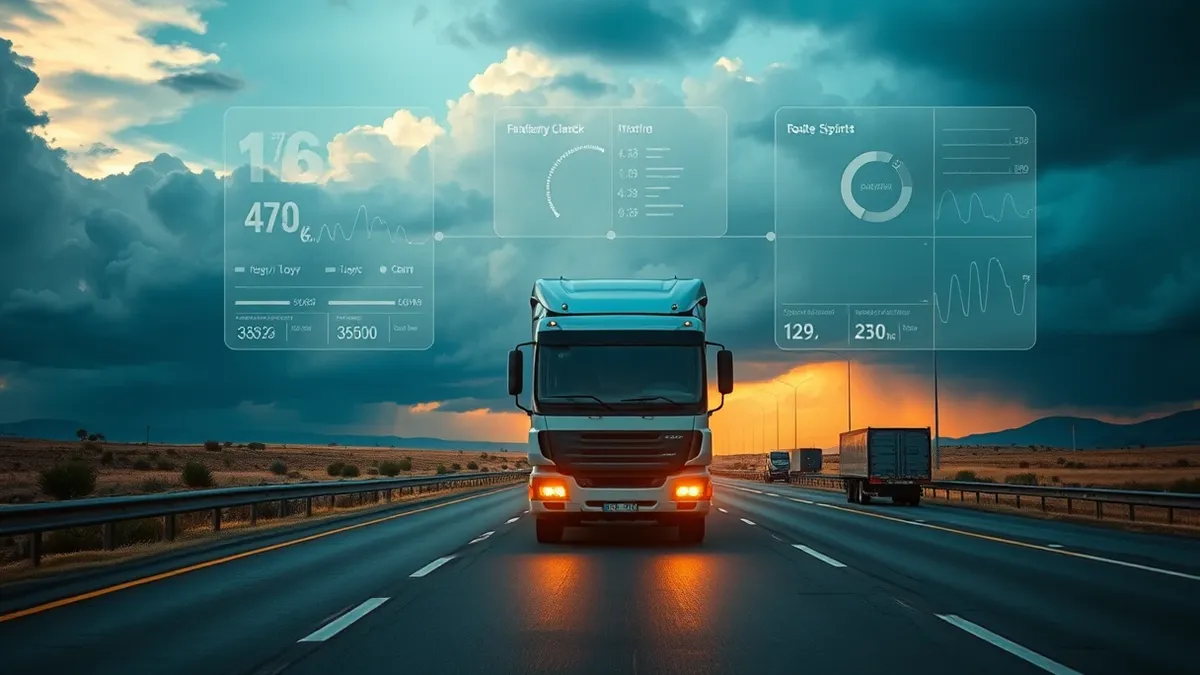
Torc, a developer of automated trucks, uses artificial intelligence to combine data from multiple sensors and generate models that predict vehicle performance, according to the published report This approach supports early testing of driverless trucks on limited routes in Texas and California.reported The technology aims to change freight shipping by operating on interstate highways in good weather without human intervention.
The figures
- No specific numerical metrics for crash reduction or fuel savings are provided in the source material.
- Testing is occurring on limited routes in two states: Texas and California.
- Driverless trucks could run almost 24 hours a day, potentially reducing idling emissions.reported
Behind the figures
Fast Company Technology reports that simulations of automated fleets show potential benefits, including improved safety and enhanced fuel economy.reported Data from modern big rigs equipped with automatic emergency braking and lane-keeping assistance systems indicate that fully automated trucks could reduce crash numbers. Torc generates its performance models by combining data from multiple sensors using AI, machine learning, and computer vision.
What it means for your stack
Developers building these systems must integrate adaptive decision-making with pattern recognition and computer vision. The stack relies on AI to process sensor inputs and predict performance. Current limitations mean the software must handle variable weather and changing roadway conditions, which remain unsolved issues for widespread deployment.
Building on this
Engineers can build systems that optimize acceleration and braking to save fuel and cost. Applications could include running multiple vehicles in a close-knit convoy or platoon to improve efficiency. Developers can also design interfaces that reduce parking needs and eliminate idling emissions by enabling near-continuous operation. These capabilities allow for less stressful driving roles, potentially improving job satisfaction for human operators who work alongside automated systems.
Why it matters
- Integration of sensor fusion requires robust AI models that can predict performance under specific conditions, as demonstrated by Torc.
- Safety improvements depend on combining automation with existing technologies like automatic emergency braking and lane-keeping assistance.
- Operational efficiency gains, such as platooning and reduced idling, offer concrete optimization targets for logistics software.
- Current limitations in variable weather and unpredictable traffic mean human-in-the-loop systems are likely necessary for the foreseeable future.
Topics: autonomous vehicles, Torc, sensor fusion, freight logistics, computer vision
Updated
Ask the article
Local keyword search of this article; no generated answers.Did this article give you the evidence you needed?
Your choice stays on this device. No public tally.Questions readers ask
Which companies are testing driverless trucks?
A few companies, including Torc, have begun testing early models on limited routes in Texas and California, according to the published report
What technologies do these trucks use?
They use a combination of AI, machine learning, computer vision, pattern recognition, and adaptive decision-making to operate without human intervention.
Why aren't driverless trucks common yet?
They have difficulty operating in variable weather, under changing roadway conditions, and alongside unpredictable drivers, which are major unsolved issues.
Reading receipt
- Torc uses AI to combine sensor data and predict truck performance.
- Simulations suggest automated fleets can reduce crash severity and transit times.
- Variable weather and unpredictable drivers remain major operational hurdles.